I’m in Lima. The buzz and chaos in the city, caused by the official and alternative conference were immediately obvious on arriving last night.
The airport, hotels and roads are full. As my driver from the airport pointed out, half the roads are shut off for security reasons and the other half, were dug up in advance of the summit, but “in true Peruvian style, haven’t quite been repaired just yet”. There were frantic road works going on as we drove through the city at midnight.
Reading the papers this morning, the main topics of interest related to the summit are the road blocks and inconvenience of the security measures, the 6,000 police that have been transferred into the city and the public holiday that’s been declared during the official summit.
But its great also see that civil society groups are already achieving some of their aims by publicising some of their concerns. The summit doesn’t start till tomorrow, but the demands and themes of the alternative summit are in the press.
La Primera newspaper for example, carries an articles setting out the accusations against some of the companies which are to be judged in the People's Tribunal, including Majaz, a mining company which is accused of not respecting community’s right to consultation and operating illegally in various location. Guarango, a Progressio Partner organisation supported the community in Piura to publicise their problems and their community referendum in which an enormous majority voted against the mine last year in September. You can see some of the videos they produced on You Tube
Monday, 12 May 2008


Sunday, 11 May 2008
Summits
I’m in my flat packing to head to Lima tonight. I’ll be one of thousands from across Latin American, the Caribbean and Europe making my way to the Peruvian capital for a packed week of activities and meetings next week.
On May 16th and 17th leaders from nearly 60 Latin American and European countries will take part in the 5th Summit of Heads of State and Government of the European Union and Latin America and the Caribbean.
In advance of the meeting, from May 13th-16th, an alternative ‘People’s Summit’, the third ‘Enlazando Alternativos’ (Linking Alternatives) meeting will take place.
The Official Summit
The EU-LAC summits are the highest political meeting of the governments of the two regions. The EU-LAC strategic partnership began with the first summit in Rio in 1999 and was consolidated at further summits in Madrid (2002), Guadalajara (2004) and Vienna (2006).
The official summit in Lima has two topics on the agenda, both key themes for Progressio and our partner organisations :
(1) Poverty, inequality, inclusion - According to the EU’s official statement: “The Lima Summit will present the opportunity for a fruitful and open dialogue between both regions on the topic of social cohesion policies, including poverty alleviation measures to eliminate discrimination and the recognition of fundamental social rights. The objective is to share experiences, promote best practices and policies, and thereby contribute to more inclusive societies and more equal opportunities for all”.
(2) Sustainable development: climate change; environment; energy
The EU and LAC countries agreed at the 2006 Vienna Summit to launch a policy dialogue on environment. They intend to give special attention to cooperation in areas such as climate change, energy and other environment-related issues.
The EU is likely to try to advance trade negotiations with regional trade blocs such as Mercosur and the Andean Community.
The Alternative Summit

Enlazando Alternativas 3 is organised by a coalition of social movements and non-governmental organisations from Europe and LAC. The organisers are in opposition to the negotiations of free trade bilateral agreements and very critical of the EU’s trade strategy “Global Europe: Competing in the World” because it promotes greater social, labour and environmental deregulation.
They state that: “The peoples of Europe, Latin America and the Caribbean are being affected by so-called global capitalism, which is especially reflected in the proliferation of free trade agreements and the liberalisation of investments, which are tools for expanding the privileges of capital over the rights of the people. The Europe of capital and its governments thus foster a policy aimed at the reconquest of Latin America, just when the countries of the region are marking two centuries since the beginning of their struggles for independence.”
Through the alternative summit they aim to create an agenda of common plans and alternatives based on the proposals presented by social movements:
“In Lima in May 2008, we will not only create opportunities for critical analysis of relationships between the EU and ALC, including the association agreements, the behaviour of multinationals, militarism and the criminalisation of social movements on both continents, but there will also be a People’s Tribunal to judge the power system of the European transnationals, both in Latin America and the Caribbean and in the EU”.
The organisers expect more than 2,000 delegates from the different regions, to attend hundreds of workshops and meetings. The topics of the workshops and the perspectives represented are diverse with events linked to six broad themes: Neoliberalism in LAC and the EU; integration and trade agreements; extractive industries, climate change and its impact on natural resources and public services; campesinos and indigenous peoples, natural resources, agro-fuels, food sovereignty, and economic, social and cultural rights; labour trade union rights, housing and migration; and social movements and human rights.
Related activities have already started - yesterday a young people’s meeting took place, as well as an ‘Alternative Media and Radios Forum’, and the ‘Sao Paulo Forum’ of various leftwing parties from LAC. Tomorrow the International Forum of Indigenous Agendas and Decolonization from Power and Knowledge begins, as well as the 2nd National Summit of Indigenous Peoples and Communities of Peru. On May 14th, there’s a preparatory meeting towards the 1st Continental Summit of Indigenous Women, to be held next year. And as part of the summit there will be a tribunal to try transnational companies.
Progressio partner organisations will be taking part in a range of events: for example at the airport tonight I’m expecting to meet Abrahan Salazar one of the leaders of MICC, the indigenous movement of Cotopaxi in Ecuador who is travelling to take part, Accion Ecologica, another Ecuadorian partner is also participating and will be running a session on the privatisation of public services, public goods and local resistances to global threats, CEPES a Peruvian partner is part of a workshop on Democratising Communications and a colleague from the network of Canastas Solidarias (food coops) in Ecuador who is working with our partner CEA on a campaign for healthy, secure, sovereign food will be presenting on their experiences.
At the ‘Permanent People’s Tribunal’ over 20 European corporations will be ‘tried’ over human rights and labour rights violations and environmental and social damage in Latin America. The corporations to be tried include: Majaz-Monterrico Metals and Vale do Rio Doce from the mining sector; as well as Roche and Boehringer from the pharmaceutical industry; Shell and Repsol YPF from the oil sector; Botnia and ENCE from the forestry-pulp industry; Syngenta in the agribusiness sector; Skanska and Thyssen Krupp in the infrastructure sector; ETI-Telecom in the telecom sector; Unión Fenosa and Suez in the electricity sector; Aguas de Barcelona and Proactiva (Veolia-FCC) in the water sector, Unilever, Camposol, Cermaq Mainstream and Marine Harvest in the agrifood sector, Bayer in the agrochemical sector, and BBVA, HSBC and Santander in the banking sector.
Demands and proposals from Linking Alternatives 3, the Peoples’ Permanent Tribunal and the other events will be delivered to the presidents and head of state attending the official summit. The closing event is planned for the 16th. The Presidents of Bolivia and Ecuador, Evo Morales and Rafael Correa are expected to attend the closing event.
I’m going to try and write something each day on what’s happening at the summits so watch this space!
On May 16th and 17th leaders from nearly 60 Latin American and European countries will take part in the 5th Summit of Heads of State and Government of the European Union and Latin America and the Caribbean.
In advance of the meeting, from May 13th-16th, an alternative ‘People’s Summit’, the third ‘Enlazando Alternativos’ (Linking Alternatives) meeting will take place.
The Official Summit
The EU-LAC summits are the highest political meeting of the governments of the two regions. The EU-LAC strategic partnership began with the first summit in Rio in 1999 and was consolidated at further summits in Madrid (2002), Guadalajara (2004) and Vienna (2006).
The official summit in Lima has two topics on the agenda, both key themes for Progressio and our partner organisations :
(1) Poverty, inequality, inclusion - According to the EU’s official statement: “The Lima Summit will present the opportunity for a fruitful and open dialogue between both regions on the topic of social cohesion policies, including poverty alleviation measures to eliminate discrimination and the recognition of fundamental social rights. The objective is to share experiences, promote best practices and policies, and thereby contribute to more inclusive societies and more equal opportunities for all”.
(2) Sustainable development: climate change; environment; energy
The EU and LAC countries agreed at the 2006 Vienna Summit to launch a policy dialogue on environment. They intend to give special attention to cooperation in areas such as climate change, energy and other environment-related issues.
The EU is likely to try to advance trade negotiations with regional trade blocs such as Mercosur and the Andean Community.
The Alternative Summit
Enlazando Alternativas 3 is organised by a coalition of social movements and non-governmental organisations from Europe and LAC. The organisers are in opposition to the negotiations of free trade bilateral agreements and very critical of the EU’s trade strategy “Global Europe: Competing in the World” because it promotes greater social, labour and environmental deregulation.
They state that: “The peoples of Europe, Latin America and the Caribbean are being affected by so-called global capitalism, which is especially reflected in the proliferation of free trade agreements and the liberalisation of investments, which are tools for expanding the privileges of capital over the rights of the people. The Europe of capital and its governments thus foster a policy aimed at the reconquest of Latin America, just when the countries of the region are marking two centuries since the beginning of their struggles for independence.”
Through the alternative summit they aim to create an agenda of common plans and alternatives based on the proposals presented by social movements:
“In Lima in May 2008, we will not only create opportunities for critical analysis of relationships between the EU and ALC, including the association agreements, the behaviour of multinationals, militarism and the criminalisation of social movements on both continents, but there will also be a People’s Tribunal to judge the power system of the European transnationals, both in Latin America and the Caribbean and in the EU”.
The organisers expect more than 2,000 delegates from the different regions, to attend hundreds of workshops and meetings. The topics of the workshops and the perspectives represented are diverse with events linked to six broad themes: Neoliberalism in LAC and the EU; integration and trade agreements; extractive industries, climate change and its impact on natural resources and public services; campesinos and indigenous peoples, natural resources, agro-fuels, food sovereignty, and economic, social and cultural rights; labour trade union rights, housing and migration; and social movements and human rights.
Related activities have already started - yesterday a young people’s meeting took place, as well as an ‘Alternative Media and Radios Forum’, and the ‘Sao Paulo Forum’ of various leftwing parties from LAC. Tomorrow the International Forum of Indigenous Agendas and Decolonization from Power and Knowledge begins, as well as the 2nd National Summit of Indigenous Peoples and Communities of Peru. On May 14th, there’s a preparatory meeting towards the 1st Continental Summit of Indigenous Women, to be held next year. And as part of the summit there will be a tribunal to try transnational companies.
Progressio partner organisations will be taking part in a range of events: for example at the airport tonight I’m expecting to meet Abrahan Salazar one of the leaders of MICC, the indigenous movement of Cotopaxi in Ecuador who is travelling to take part, Accion Ecologica, another Ecuadorian partner is also participating and will be running a session on the privatisation of public services, public goods and local resistances to global threats, CEPES a Peruvian partner is part of a workshop on Democratising Communications and a colleague from the network of Canastas Solidarias (food coops) in Ecuador who is working with our partner CEA on a campaign for healthy, secure, sovereign food will be presenting on their experiences.
At the ‘Permanent People’s Tribunal’ over 20 European corporations will be ‘tried’ over human rights and labour rights violations and environmental and social damage in Latin America. The corporations to be tried include: Majaz-Monterrico Metals and Vale do Rio Doce from the mining sector; as well as Roche and Boehringer from the pharmaceutical industry; Shell and Repsol YPF from the oil sector; Botnia and ENCE from the forestry-pulp industry; Syngenta in the agribusiness sector; Skanska and Thyssen Krupp in the infrastructure sector; ETI-Telecom in the telecom sector; Unión Fenosa and Suez in the electricity sector; Aguas de Barcelona and Proactiva (Veolia-FCC) in the water sector, Unilever, Camposol, Cermaq Mainstream and Marine Harvest in the agrifood sector, Bayer in the agrochemical sector, and BBVA, HSBC and Santander in the banking sector.
Demands and proposals from Linking Alternatives 3, the Peoples’ Permanent Tribunal and the other events will be delivered to the presidents and head of state attending the official summit. The closing event is planned for the 16th. The Presidents of Bolivia and Ecuador, Evo Morales and Rafael Correa are expected to attend the closing event.
I’m going to try and write something each day on what’s happening at the summits so watch this space!
Friday, 11 April 2008
Holidaying with Matt and Claire
Matt and Claire arrived at the end of March for a holiday. In the last week of March we went with Mark on a trip to the rainforest and stayed in Bataburo lodge, an ecotourism project in Huarani ( indigenous group) territory. It is deep in the rainforest: after flying to Coca we took a bumpy 3 hour bus ride along a road built for oil extraction and then met the river Tinguino.
The road...

 Drying washing on oil pipeline
 The river...

After waiting for a rainstorm (and arguing about the lack of life jackets and veggie food...) we set off in a canoe with outboard motor. The river is amazingly meandering - bending back on itself lots and narrow so we could see the plants and wildlife from the boat.

We arrived at the lodge just as it was getting dark after three hours in the canoe. We stayed for 3 nights and spent the days walking in the rainforest and taking tours on the river and of an oxbow lake in the boat.

It was amazing to see the rainforest and learn about all the weird and wonderful survival/competition strategies - like a palm tree that walks to get to the light, a lemon something tree that has a symbiotic relationship with little ants that taste of lemon if you eat them - they live in little hollows in its branches and help the tree by secreting an acidy lemon substance that kills off other plants and big strangler vines that climb up trees to get to the light, killing them in the process.
Lemon ants...
 strangler vine
 walking tree
 big tree...
We saw monkeys, lots of birds including toucans and macaws, caiman, lots of turtles basking in the sun, a snake, lizards and lots of bugs.


 Otavalo
 Cotopaxi
 Sinchilagua volcano
 The cosy cabin we stayed in
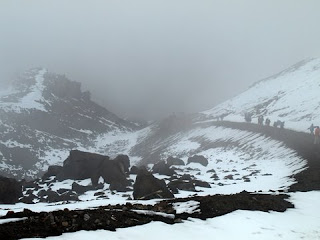
 You can just see Cotopaxi through the clouds ( you have to use some imagination)
 Climbing up to the refugee


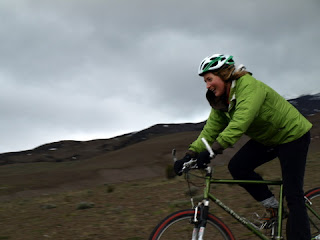
 Cycling down (the best bit)
The road...
Drying washing on oil pipelineThe river...After waiting for a rainstorm (and arguing about the lack of life jackets and veggie food...) we set off in a canoe with outboard motor. The river is amazingly meandering - bending back on itself lots and narrow so we could see the plants and wildlife from the boat.
We arrived at the lodge just as it was getting dark after three hours in the canoe. We stayed for 3 nights and spent the days walking in the rainforest and taking tours on the river and of an oxbow lake in the boat.
It was amazing to see the rainforest and learn about all the weird and wonderful survival/competition strategies - like a palm tree that walks to get to the light, a lemon something tree that has a symbiotic relationship with little ants that taste of lemon if you eat them - they live in little hollows in its branches and help the tree by secreting an acidy lemon substance that kills off other plants and big strangler vines that climb up trees to get to the light, killing them in the process.
Lemon ants...
strangler vinewalking treebig tree...We saw monkeys, lots of birds including toucans and macaws, caiman, lots of turtles basking in the sun, a snake, lizards and lots of bugs.


 Otavalo
We got back to Quito on the Thursday night, all with various degrees of food poisoning and celebrated my birthday on the Friday in a very subdued fashion - lying around drinking herbal teas! I was delighted to get lots of cards and gifts from the UK - thanks to everyone who sent them!
Then on Saturday when we had recovered a bit we went to Otovalo, a town about 2 hours north of Quito. We shopped at the tourist/indigenous market, ate lots, tried in vain to order 'a nice cup of tea' (British style) and on the Sunday went to the volcanic crater lake Cuicocha.
Cotopaxi Then Matt and Claire went to Peru and Mark and I went back to work. But they came back the next weekend and we went to Cotopaxi for some high altitude walking and cycling
Sinchilagua volcanoThe cosy cabin we stayed in You can just see Cotopaxi through the clouds ( you have to use some imagination)Climbing up to the refugeeCycling down (the best bit)
 Now back at work and Matt and Claire have gone, and Mark has gone, and I'm wishing I was still on holiday...
Wednesday, 19 March 2008
Churches, HIV and Climbing in Cuenca
I got back to Ecuador last Weds (after spending 2 and a half weeks in Peru) and early on Thurs morning left Quito again for Cuenca to attend ´The First Latin American Ecumenical Meeting on HIV and AIDS'.


+and+another+sister+whose+name+i+have+to+find+out+from+Madres+Adoratrices.JPG) Two nuns who are doing great HIV prevention work with sex workers in Ecuador ( From Madres Adoratrices.
Two nuns who are doing great HIV prevention work with sex workers in Ecuador ( From Madres Adoratrices.
“Know the truth and it will set you free” (John 8:32) is the title and the thinking behind an event in the Ecuadorian city of Cuenca which brought together diverse faith communities from across Latin America to discuss experiences and perspectives on HIV and AIDS.
The conference, which is the first of its kind in the country, was organised by the Social Pastoral of the Cuenca Archdiocese (a Progressio partner organisation) with the support of the Catholic Relief Service and Progressio.
On March 14-15th, Religious leaders working on HIV and AIDS in eight countries in Latin America presented their experiences to an audience of around 60 representatives from churches, faith-based organisations and social organisations including Anglican, Jewish, Methodist, Baptist, Evangelical, and Catholic churches. Development workers and staff from Progressio also took part.
The event was an opportunity for churches to share experiences and positions. The organisers were keen to open up an ecumenical dialogue on the topic because they recognise that whilst many churches have been very active in prevention, training and care of people living with HIV, others have been silent or indifferent to the problem.
The varied presentations and discussions at the event allowed participants to analyse HIV not just as a medical problem, but as an issue which causes rights violations, poverty, emotional trauma and damage to bodies and souls through discrimination and isolation.
The topics discussed included: churches’ responses to HIV and AIDS; experiences of working on sexuality and HIV AIDS; methods of working on HIV and AIDS; and how to work with vulnerable groups including LGBT, sex workers, drug users, prison populations, street children, teenagers, women and children. The event ended with an ecumenical celebration in the city cathedral
At the end of the event a joint declaration was drafted which is to be circulated to all the groups present to sign. The document affirms Christians’ and churches’ support, love and solidarity for all people living with HIV and AIDS and commitment to work on the theme. It takes a stand against moralistic or simplistic responses and the idea that HIV AIDS is a ‘punishment’ inflicted by God.
The Pastoral Social of Cuenca hopes that this first event will be the beginning of a process of joint learning amongst churches that will lead to further meetings and ecumenical working.


 I am climbing not lying down but I can't turn the photo over...

It was a new experience for me to be at an event where everythign is discusssed based on faith - I'm used to a very secular way of looking at the world. It was good to meet some religious leaders who are doing very progressive work on the issue, but depressing to hear some of the more conservative views of the past and present church hierarchies and some of the barriers priests and nuns and social pastorals on the ground face.
Two nuns who are doing great HIV prevention work with sex workers in Ecuador ( From Madres Adoratrices.Have pasted below a short article I wrote on the event:
---------------------------------------------------------------------------------
Latin American Churches meet to discuss responses to HIV and AIDS
“Know the truth and it will set you free” (John 8:32) is the title and the thinking behind an event in the Ecuadorian city of Cuenca which brought together diverse faith communities from across Latin America to discuss experiences and perspectives on HIV and AIDS.
The conference, which is the first of its kind in the country, was organised by the Social Pastoral of the Cuenca Archdiocese (a Progressio partner organisation) with the support of the Catholic Relief Service and Progressio.
On March 14-15th, Religious leaders working on HIV and AIDS in eight countries in Latin America presented their experiences to an audience of around 60 representatives from churches, faith-based organisations and social organisations including Anglican, Jewish, Methodist, Baptist, Evangelical, and Catholic churches. Development workers and staff from Progressio also took part.
The event was an opportunity for churches to share experiences and positions. The organisers were keen to open up an ecumenical dialogue on the topic because they recognise that whilst many churches have been very active in prevention, training and care of people living with HIV, others have been silent or indifferent to the problem.
The varied presentations and discussions at the event allowed participants to analyse HIV not just as a medical problem, but as an issue which causes rights violations, poverty, emotional trauma and damage to bodies and souls through discrimination and isolation.
The topics discussed included: churches’ responses to HIV and AIDS; experiences of working on sexuality and HIV AIDS; methods of working on HIV and AIDS; and how to work with vulnerable groups including LGBT, sex workers, drug users, prison populations, street children, teenagers, women and children. The event ended with an ecumenical celebration in the city cathedral
At the end of the event a joint declaration was drafted which is to be circulated to all the groups present to sign. The document affirms Christians’ and churches’ support, love and solidarity for all people living with HIV and AIDS and commitment to work on the theme. It takes a stand against moralistic or simplistic responses and the idea that HIV AIDS is a ‘punishment’ inflicted by God.
The Pastoral Social of Cuenca hopes that this first event will be the beginning of a process of joint learning amongst churches that will lead to further meetings and ecumenical working.
------------------------------------------------------------------------------------------
Mark came down to join me in Cuenca so on Saturday we went to a big rocky outcrop called Cojitambo with Javier a climbing friend of his. He showed us all the climbing routes that he, his brother and friends have set up and we had a go at climbing and rapelling (my first time). 
I am climbing not lying down but I can't turn the photo over...
Sunday, 9 March 2008
Catching up - some photos
After a prolonged silence, some photos. In a slightly jumbled order...
Chimborazo
Mark at Chimborazo a few weekends ago. Chimborazo is behind him in the fog. We did a hard cold wet cycle from 4000m up to 4900m to the refuge. (Although I did more walking and complaining than cycling...)


 Logging


Mindo


 The beach:

 The meeting:

 The sunsets:


 Interviewing farmers in Huaral


Chimborazo
Mark at Chimborazo a few weekends ago. Chimborazo is behind him in the fog. We did a hard cold wet cycle from 4000m up to 4900m to the refuge. (Although I did more walking and complaining than cycling...)
Illegal logging and trip to Esmeraldas
I went with Luis to check out the location for a new development worker in Esmeraldas in the north west of Ecuador. I wanted to do some interviews with communites affected by illegal logging, but people were too scared to be seen talking to a strange foreigner and preferred to come to our office in Quito to talk. Took some photos of logging activites though...
Esmeraldas - the city:
Unplanned invasion housing:
Borbon:

San Lorenzo:

African palm plantations:
Huge areas of forest are being cut down and replaced with monoculture palm plantations
 Logging


 Trip out to Plaza Foch: night photography


Mindo
Amazing lush leafyness and lots of rain
 Mark climbing up very steep ladder (sideways - cant seem to turn it over)
 Mark climbing up very steep ladder (sideways - cant seem to turn it over)

Peru Development workers meeting on the beach
Last week was the DW meeting on a beautiful beach Punto Rocas about an hour south of Lima(It's a hard life)

 The beach:
 The meeting:
 The sunsets:


 Interviewing farmers in Huaral
I went to Huaral, a bizarre lush river valley in the middle of the desert to the north of Lima. A new Progressio development worker, Bruno started work there this month with our partner organisation Cepes. He'll be doing environmental work with the small scale farmers there.
Some of the ad-hoc housing in the desert (communities established through invasion/squatting of land with no planning and no services):

A tall white gringa with some farmers: (I was interviewing them about terminator technology, GM seeds and their own seedsaving or buying habits). None of them had heard of GM technology, some thought it sounded dangerous, others thought they would like to try it...

The view from my flat in Quito

The view from my flat in Quito
by day...
 and night:

Playa Escondida


Lots of birds. Even though it is desert and really hot there are penguins because the humbolt current makes the sea very cold.


 The lumps under the arch are sealions.

The candelabra (The guide didnt really explain what this is - its huge and he said it was either linked to the Nazca lines, or made by sailors as a compass/map, or an ancient holy symbol related to the halluconogenic cacti or made by aliens.)
 Pelicans on the beach in Paracas


Pisco


Heaps of people's possession and furniture.


and night:Playa Escondida
For Carnaval, we went with the South American Explorers club to a beach in the north of Ecuador near Atacames. Beautiful with lots of cycling, eating, drinking and scrabble and not nearly as much rain as there might have been.


Paracas
Last weekend I went to Pisco to go and visit the nearby Paracas National Park and the Ballestras Islands. They are wierd desert islands totally covered in birds - in colonial times one of the main sources of Peru's income because the hot dry conditions mean that the bird dropping - guano - are preserved perfectly. It was collected in huge quantities and exported as fertiliser.
(The tiny black spots on top of the hill are thousands of birds and the white is all guano. Below on the beach are loads of sealions. The mother sealions were swimming around teaching the babies to swim. )

Lots of birds. Even though it is desert and really hot there are penguins because the humbolt current makes the sea very cold.


 The lumps under the arch are sealions.
The candelabra (The guide didnt really explain what this is - its huge and he said it was either linked to the Nazca lines, or made by sailors as a compass/map, or an ancient holy symbol related to the halluconogenic cacti or made by aliens.)
 Pelicans on the beach in Paracas


Pisco
Being in Picso was depressing. It was very near the epicentre of the earthquake in August and, six months on, looking at parts of the town, you'd think it had happened the day before. 


Heaps of people's possession and furniture.
A service in the remains of the church which collapsed in the earthquake killing 200 people.
Subscribe to:
Posts (Atom)